Hundreds of millions of jobs to be automated by 2030

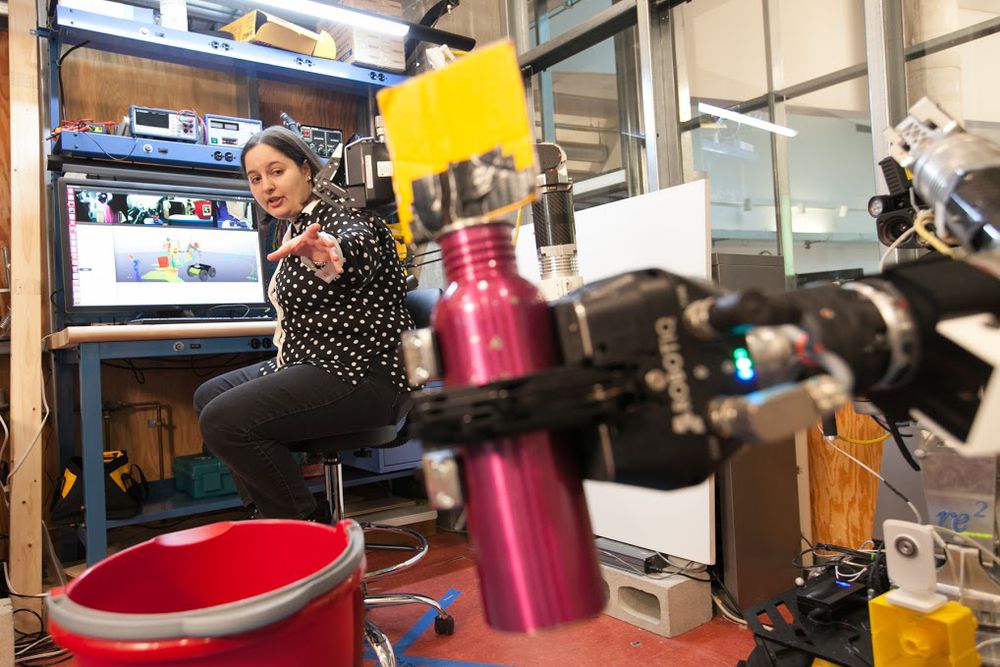
The McKinsey Global Institute cautions that as many as 375 million workers will need to switch occupational categories by 2030 due to automation.

The work most at risk of automation includes physical jobs in predictable environments, such as operating machinery or preparing fast food. Data collection and processing is also in the crosshairs, with implications for mortgage origination, paralegals, accounts and back-office processing.

To remain viable, workers must embrace retraining in different fields. But governments and companies will need to help smooth what could be a rocky transition.

Source: 375 million jobs may be automated by 2030, study suggests – Nov. 28, 2017

It’s even more important to teach students critical thinking and help them find their thirst for knowledge. The worker of tomorrow (and I’d say even today) needs to be constantly learning new things to stay relevant.


 

Similar Posts

  • Focusing on mistakes

    Once a month, this column will examine the insights that science offers about the way people learn, and how such findings could influence schools. Most of us can remember a moment like this from our school years: the teacher poses a question – maybe it’s math, maybe history.  You raise your hand, you give your…

  • Lower productivity and innovation due to security?

    Most security teams use a “prohibition approach” of restricting user access to websites and applications, according to a study conducted by Vanson Bourneand commissioned by Bromium Research. However, this approach not only hampers productivity and innovation, but is a major source of frustration for users, according to the survey of 500 CISOs from large enterprises in…

  • Teenagers and smartphones

    The author tries very hard to convince the reader that teenagers (the group she calls iGen) who “spend more time than average on screen activities are more likely to be unhappy”, more prone to depression, and at greater risk for suicide. There’s not a single exception. All screen activities are linked to less happiness, and…

  • What’s next for MOOCs?

    It has become a platitude by now to say that massive open online courses largely failed to achieve the promise many advocates saw to expand access to high-quality education democratically throughout the world.   But now two researchers have provided the analysis and data to prove it. Source: Study offers data to show MOOCs didn’t achieve…

  • More math in preschool?

    But what about math? Deborah Stipek, a professor at Stanford and the former dean of the school of education, says math is just as important—if not more—to laying the foundations for educational success. But we are not nearly as focused on planting the seeds for a future love of math as we are for reading….

  • Create infographics with this 9 tools

    When learners design their own infographics they interpret their data, information, research and facts. Students create a meaningful connection with the data and share with others the important bigger picture the data tells. Infographics can persuade others to act or reflect. The following web tools will help students design awesome infographics. Source: 9 Web Tools for…