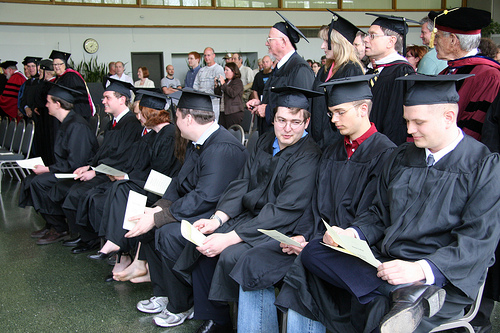
The traditional higher-education system works great for lots of students. But it forces countless others, like my nephews, to choose between two bad options: either enter a four-year bachelor’s degree program for which they are not ready, academically or emotionally; or pursue some kind of job-focused training program that, while valuable, may effectively put a ceiling on their careers.
It’s a dilemma millions of middle- and upper-middle-class families know well, but it’s even worse for working-class and poor families. At the end of the day, one of my nephew’s parents could afford to pay for a four-year degree, even if they knew a lot of the coursework would wash over their son. But for many low-income students, spending four years in school before even starting a career is not an option. That’s part of the reason why so many low-income students end up in technical training programs—not because they are not interested in earning a bachelor’s degree, but because they need to earn a decent income along the way. Many of those technical programs lead to good-paying jobs. What they don’t lead to is a bachelor’s degree. And without a B.A., there is only so far you can reasonably expect to rise in this country.
It’s been said that the bachelor degree is now the high school diploma of 30 years ago. And part of the reverence for BAs is the fact that it’s easy to weed out applicants, even if they are highly qualified for a job. Obviously, a bachelor’s degree is no guarantee of competence, but there should be alternative paths to a BA for those that lack the means to take four years off.
Preteens and teens may appear dazzlingly fluent, flitting among social-media sites, uploading selfies and texting friends. But they’re often clueless about evaluating the accuracy and trustworthiness of what they find. Some 82% of middle-schoolers couldn’t distinguish between an ad labeled “sponsored content” and a real news story on a website, according to a Stanford University study…
Since it’s the first day of August, I figured it’s time to list 13 things to do before the first day of school. That doesn’t mean you need to do all of them, or even a majority of them, but hopefully there is one or two tips that you find beneficial. Do you have any…
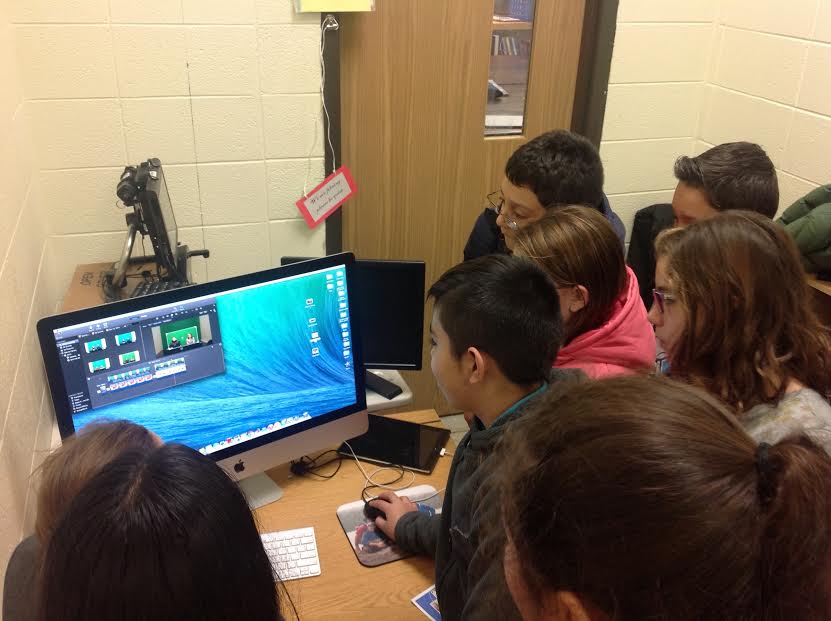
You’ve probably heard of the student-led “Genius Bar”, which is generally a team of student leaders that provide technical support for the technology devices and programs in their schools. What a great way to utilize and develop student knowledge and skills, right? I couldn’t agree more. Busch’s student tech teams have four sub-committees: the “Newcast…
A group of seventh- and eighth-grade girls sat around a lunch table discussing a new game-like app they use in school. Danna Rodriguez somewhat sullenly said she didn’t want to care about Strides, which tracks points students can earn for attendance, grade-point average and engagement with the app itself, among other things. But she can’t…
It wasn’t Nineteen Eighty-Four that had the most to say about the America of the 1980s, but rather Aldous Huxley’s Brave New World. “In Huxley’s vision,” Postman noted, “no Big Brother is required to deprive people of their autonomy, maturity, and history.” Instead: “People will come to love their oppression, to adore the technologies that…