In a world full of fancy development tools and sites, the kernel project’s dependence on email and mailing lists can seem quaintly dated, if not positively prehistoric. But, as Greg Kroah-Hartman pointed out in a Kernel Recipes talk titled “Patches carved into stone tablets”, there are some good reasons for the kernel community’s choices. Rather than being a holdover from an older era, email remains the best way to manage a project as large as the kernel.
A kernel is the first layer of computer, it controls everything on how the computer will work. The Linux Kernel is the most popular kernel in use today, powering over 1.5 billion Android devices, millions of Chromebooks, and millions of devices that are in use everyday (things from wireless routers to smartwatches). This doesn’t include all of the web services we depend on every day that run some version of Linux. You’re probably using something that requires Linux every day.
So what does that have to do with email? With Kernel development which involves thousands of developers around the world, email is the only technology that has proven itself to manage the process of Linux kernel development. Even if email seems old fashion, I like to point out to students that almost every service they use relies on email for account maintenance.
A corporate laptop being used in a coffee shop at a weekend was enough to allow a sophisticated cybercrime group to compromise an organisation’s entire infrastructure. The incident was detailed by cybersecurity firm Crowdstrike as part of its Cyber Intrusion Services Casebook 2018 report and serves as a reminder that laptops and other devices that are secure while…
Scientists at Northwestern University’s Kellogg School of Management have established a causal relationship between failure and future success, proving German philosopher Friedrich Nietzsche’s adage that “what does not kill me makes me stronger.” Source: Science demonstrates that what doesn’t kill you makes you stronger: Researchers find that early-career failure promotes future professional success — ScienceDaily…
The past five years have witnessed a preCambrian-like explosion of thousands of edtech products, many of which are “free,” and all of which have been designed for teachers, schools and students. Teachers, particularly those with students for whom school is an achingly bad fit, became early adopters. These educators are desperate to find ways to…
“A number of studies have shown that mindfulness can improve cognitive abilities, including certain verbal abilities. However, little research has examined how mindfulness can affect verbal learning and memory. Furthermore, no research has examined the mechanism by which mindfulness may improve learning and memory,” said study author Adam Lueke, an assistant teaching professor at Ball…
In 2013, the superintendent charged our district technology committee—comprised of board members, teachers, administrators, parents and students—to come up with a plan that would provide an equal education opportunity for all students. Beekmantown’s poverty rate is the highest in Clinton County at 53%, and 30% of our students don’t have access to the internet at…
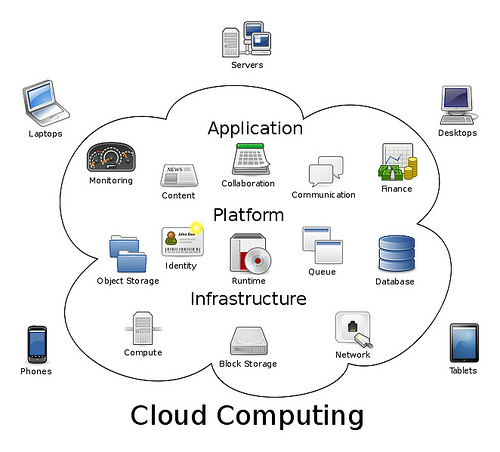
Teachers are incorporating cloud tools and content into instruction in ways that change how they interact with students both in and outside the classroom. They are no longer limited to face-to-face instruction or constricted by class schedules. Instead, teachers are using both tools that are imposed by administrators and more ad-hoc resources. Source: How teachers see…