The secret to VLACS’ success may be that it does things differently from most virtual schools. It puts a focus on building strong student-teacher relationships. It breaks up traditional courses into specific skills and abilities, called “competencies,” that students master through a personalized blend of traditional lesson plans, offline projects and real-world experiences.
An interesting approach to the limitations of relationships with online coursework. It seems to be working for them, but I’ll need to do more research.
Measuring edtech efficiency Frameworks to measure detect. 5 tips for Google Slides from @alicekeeler Great tips on using Google Slides! Web Resource Parent Consent and Approval Process Do you know what data services are storing about your students?
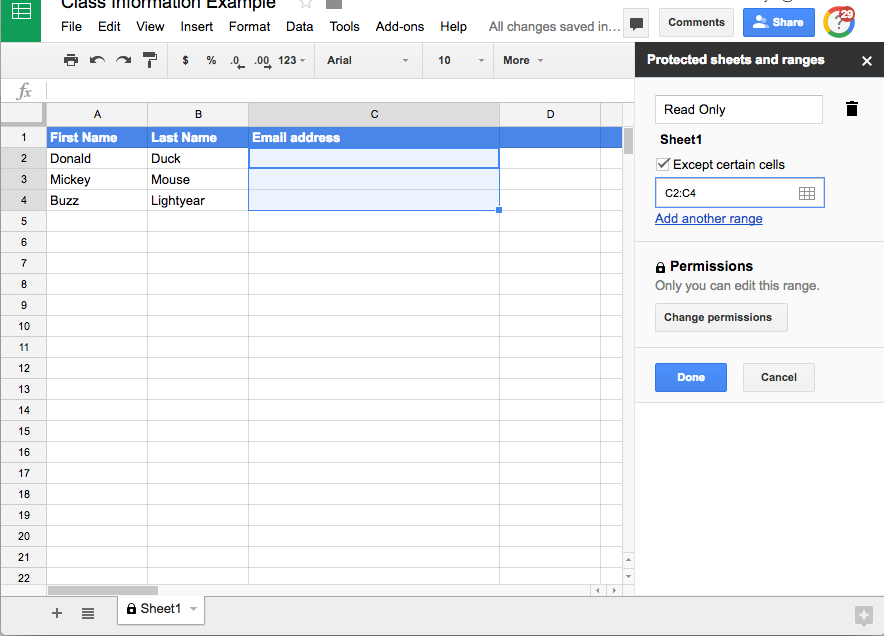
This is part 1 of 13 things to do before the first day of school For a lot of scenarios, creating a Google Form to collect information works well. But it could also be overkill to create a form just to collect a student’s username from a web service, or to have a student select…
So, for example, if you’re at an important meeting, you can use Pix to take a photo of a diagram on the whiteboard to remember it later. The Pix app will then sharpen the focus, ramp up the color and tone, crop out the background and realign the image appropriately so that the diagram is…
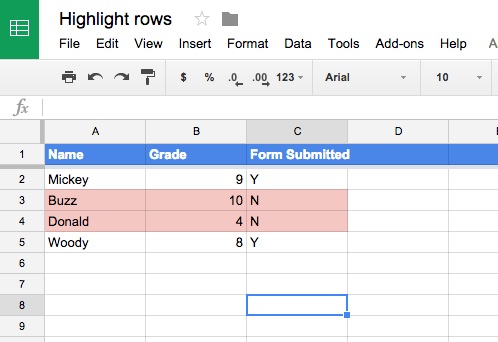
I use conditional formatting for individual cells quite a bit. What’s nice is that conditional formatting can also highlight rows in Google Sheets, which is very possible! Some ways this is useful is when you are analyzing student scores. You can mark rows where the student is proficient in green, where the student is borderline…