Preteens and teens may appear dazzlingly fluent, flitting among social-media sites, uploading selfies and texting friends. But they’re often clueless about evaluating the accuracy and trustworthiness of what they find.
Some 82% of middle-schoolers couldn’t distinguish between an ad labeled “sponsored content” and a real news story on a website, according to a Stanford University study of 7,804 students from middle school through college. The study, set for release Tuesday, is the biggest so far on how teens evaluate information they find online. Many students judged the credibility of newsy tweets based on how much detail they contained or whether a large photo was attached, rather than on the source.
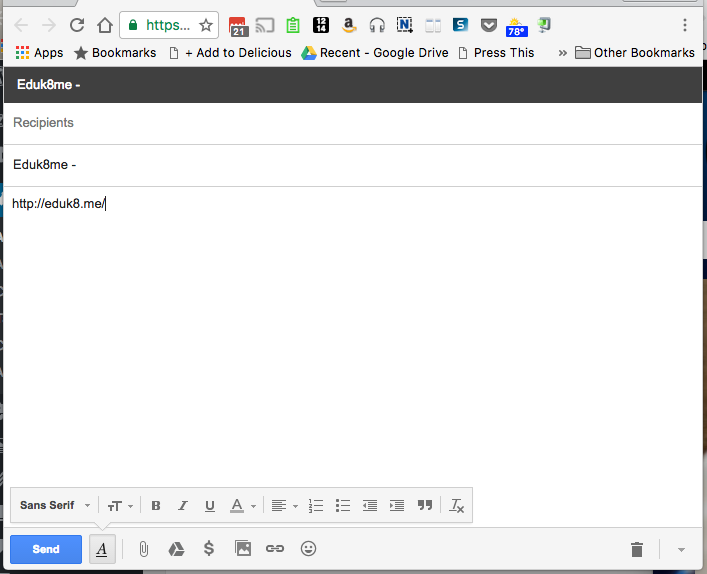
Send from Gmail (by Google) is an extension for Google Chrome that lets you send the current page as a link through Gmail. It adds an icon to the Chrome toolbar that, when clicked, will open a compose email window. Here’s what the compose window looks like when the icon is clicked from the https://eduk8.me home…
Kids certainly need to understand the concepts of programming, the logic behind the computing devices, visible and not, they use everyday. That needs to be a fundamental part of the basic course of study, replacing the rote processing and endless repetition in the K12 curriculum we call “math”. The computer science classes need to be…
Increasingly, though, I am uncomfortable with the distinction we casually make between “pro” users and “regular” users. I don’t think these sorts of utilities are useful just for computer nerds. (There’s another category we should leave behind us.) I think they’re useful for everybody. Put another way: we’re all “pro” users. I want to…
In the past, I’ve talked about organizing my files by school year. At the beginning of the year, I would create a folder named after the school year. For example, last year’s folder was named 21-22. Inside of the folder I created the following folders: Documents Pictures Movies Downloads Any files I would re-use from…