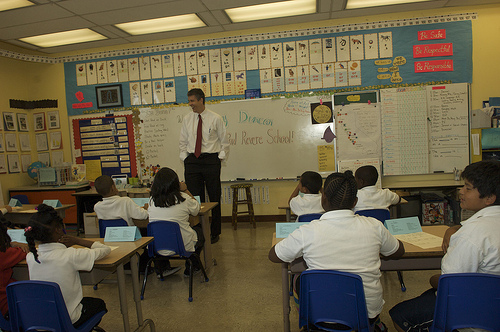
Although we often believe we act without bias or stereotyping, we’re all subject to unconscious biases: automatic, mental shortcuts we use to process information and make decisions quickly. These shortcuts are useful, but can also subtly and negatively influence our actions. And in the classroom, they can have serious consequences—educators could unintentionally discriminate against some of their students, discouraging them from pursuing certain fields of study.
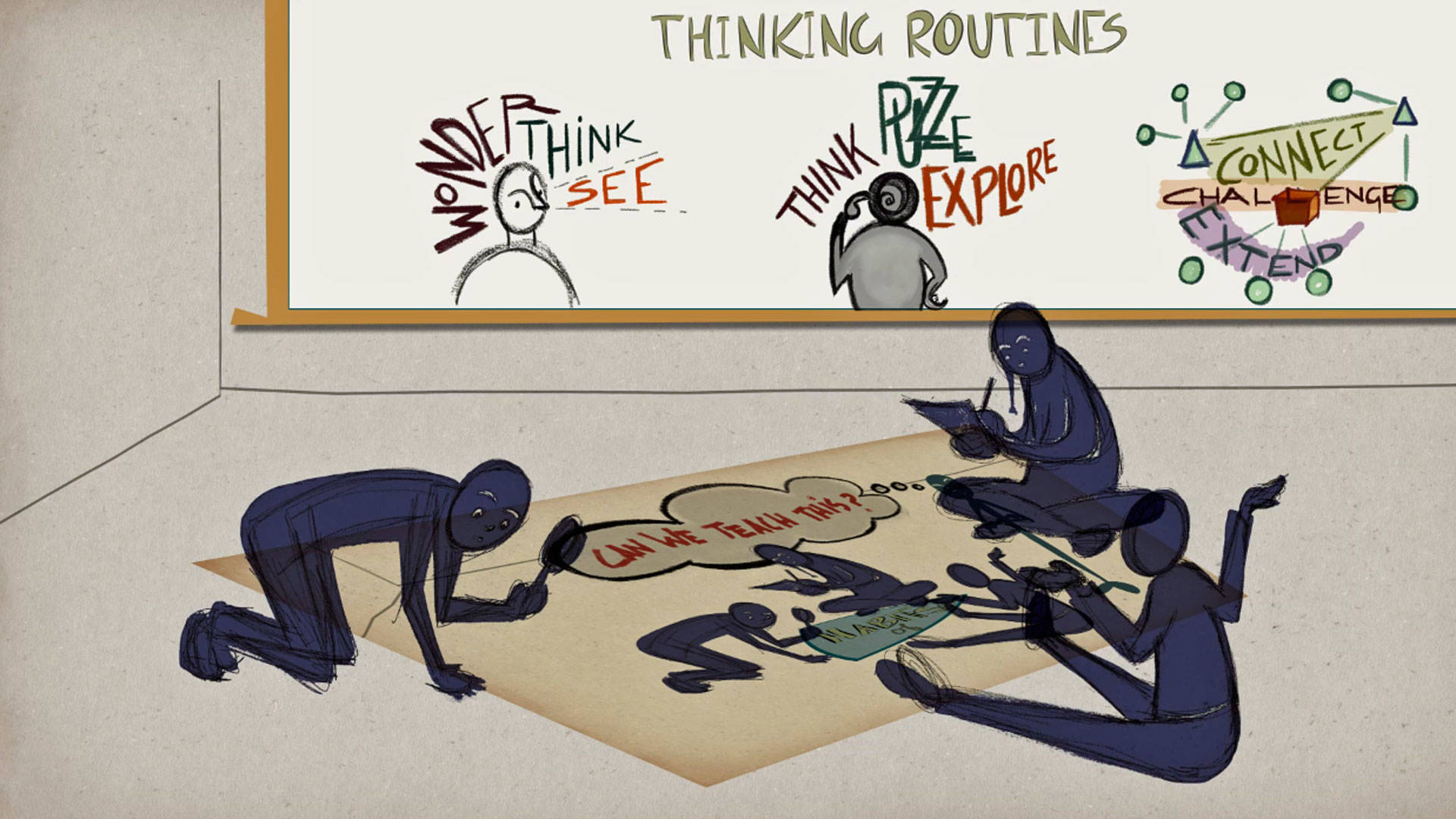
Amidst the discussions about content standards, curriculum and teaching strategies, it’s easy to lose sight of the big goals behind education, like giving students tools to deepen their quantitative and qualitative understanding of the world. Teaching for understanding has always been a challenge, which is why Harvard’s Project Zero has been trying to figure out how…
Fans of Douglas Adams’s Hitchhiker’s Guide to the Galaxy treasure the bit where a group of hyper-dimensional beings demand that a supercomputer tells them the secret to life, the universe and everything. The machine, which has been constructed specifically for this purpose, takes 7.5m years to compute the answer, which famously comes out as 42….
Computer note-taking was a point of contention at my school. Almost every teacher used laptops. But we varied in how much we allowed students to take notes on them during class. Those in the no-computer-notes camp pointed to how often students were distracted by messaging and social media. Those who allowed laptops for notes argued that…
In the real world, there’s no textbook or curriculum. There’s no way to practice. There’s no source of continuous feedback. There are no teachers — it’s just you and whoever you can convince to help you. So how do you learn something no one can teach you? How do you become a world-class expert on something few…
It’s high time for students to move beyond an hour of coding exercises and learn computational thinking. That’s the message of a new report from Digital Promisethat examines what’s important to know and be able to do in a “computational world.” Source: It’s Time to Weave Computational Thinking into K-12 — THE Journal The researchers us of…
So we now can work in teams despite being continental distances away from each other but we do have to acquire the skills to do that. And if we fail to do so, that has a rather grave disadvantage, which is that… Nothing has as dire an impact on productivity as poor communications. This is a truism that applies…